how will you commemorate the Civil War’s 150th anniversary?

cwdrummer

Winslow Homer's 1862 Study of a Drummer, in the collection of the Smithsonian's Cooper-Hewitt, National Design Museum.

Here at Affiliations, we’ve been hearing about all kinds of plans to commemorate the 150th anniversary of the Civil War.   Thinking about borrowing artifacts?  Looking for a speaker for a conference or public program?  Wonder what kinds of exhibitions other museums are organizing?   Here’s what we’ve heard so far from inside the Smithsonian and around the Affiliate network.


For the Smithsonian, the best and first stop to view the vast and manifold collections on this topic is the Civil War@Smithsonian website.  There, artifacts from several Smithsonian museums are grouped under such topics as Slavery & Abolition, Soldiering, Life & Culture, Leaders and Abraham Lincoln, among others.  (The site even talks about the various ways that the Smithsonian itself was involved in the Civil War.) 


And speaking of Lincoln, you’ll find a treasure trove of resources (and possible speakers) at the Lincoln Online Conference site, sponsored by the Center for Education and Museum Studies.   Here, Smithsonian scholars discuss a wide range of issues related to our 16th President from Lincoln’s Air Force to Mathew Brady’s photographs. 


For even more ideas on programming or group tour itineraries, turn to the Smithsonian Associates’ Civil War Studies site.  You can also sign up here for the Civil War Studies enewsletter for up-to-date program information and original essays exploring all facets of the War.  Want to hear about the largest stash of money ever discovered?   Invite American History numismatics curator Richard Doty to talk to your audiences about confederate currency, and show a few examples from our collection.


If you’re an art museum, don’t despair – you might be interested in what the Smithsonian’s American Art Museum is planning to commemorate the War.  Better Angels of Our Nature: Art During the Civil War and Reconstruction will examine the impact of the Civil War and its aftermath on visual arts in America.   Information on commemorative exhibitions at the Portrait Gallery will be posted soon so watch out for that.


And how about in Affiliateland?  Many Affiliates are already planning commemorations of their own.  Here are some of the plans we’ve heard about so far:


–          the Frazier International History Museum (Louisville, KY) is planning a Civil War symposium, update to its permanent exhibition, & a traveling show called My Brother My Enemy

–          the American Civil War Center at Historic Tredegar (Richmond, VA) is partnering with the Birmingham Civil Rights Institute (Alabama) on a 2011 Civil War Conference

–          the American Textile History Museum (Lowell, MA) is organizing a traveling exhibition on Civil War textiles

–          the Heinz History Center (Pittsburgh, PA) will be one of three sites to host a major Civil War exhibition and will produce two publications on photography and the role of African Americans in the Civil War, as part of PA 150,  a major statewide commemoration  

–          the African American Museum in Philadelphia (PA) has already opened the Audacious Freedoms exhibition which explores the Underground Railroad, African American soldiers in the Civil War, and other topics

–          B & O Museum (Baltimore, MD) is planning a Civil War Railroading exhibition and symposium.


What are you planning?  Leave us a comment and let us know.
affiliates in the news: week of march 15

Congratulations to these Affiliates making headlines this week!

Guests in Ecosystems at the California Science Center. Photo by: California Science Center

California Science Center (Los Angeles, CA)
Exploring the world’s ecosystems in the California Science Center’s new wing

North Carolina Museum of Natural Sciences (Raleigh, NC)
SECU Members Help Bring NC’s Natural Beauty to Students Across the State!

The Frost Art Museum at Florida International University (Miami, FL)
The Frost Art Museum to Unveil Knight Foundation Virtual Gallery

Arts Council for Long Beach (Long Beach, CA)
Artistic Creation Blossoms In Vacant Lots


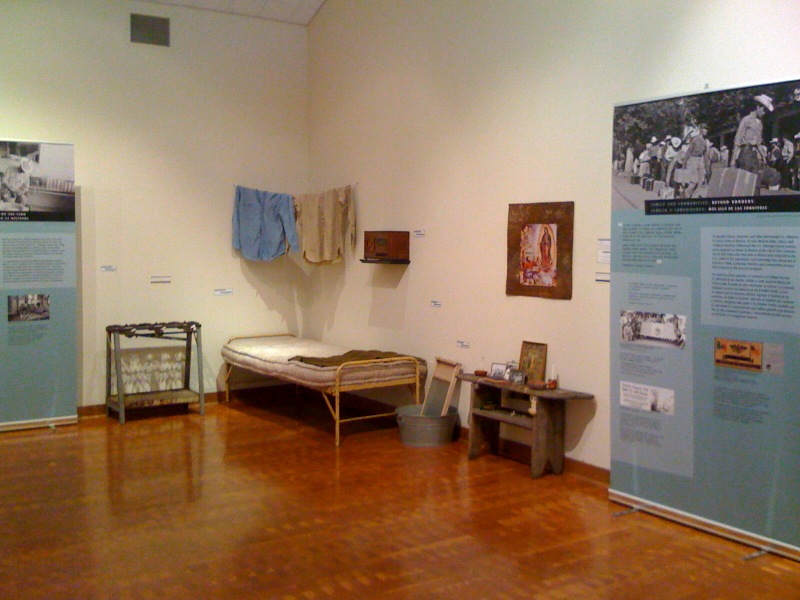
Bittersweet Harvest at Mexican Heritage Plaza

Bittersweet Harvest at Mexican Heritage Plaza. Photo by Laura Hansen

Mexican Heritage Plaza (San Jose, CA)
Bittersweet Harvest: the Smithsonian’s Bracero Exhibit at Mexican Heritage Plaza

Plimoth Plantation (Plymouth, MA)
Plimoth Plantation parades into a new season

Sculptures Available from NMAH

Stephen Hansen Sculptures Available to Affiliates from the National Museum of American History


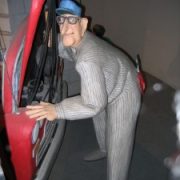
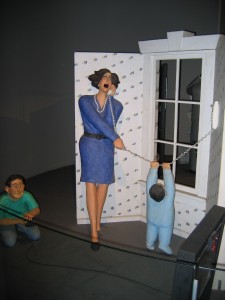
One of the former sculptures in the Information Age exhibition, available for Affiliate adoption.

One of the sculptures in the former Information Age exhibition, available for Affiliate adoption.

The Information Age might seem like too serious a topic to loan itself to humor, but this is what happened when the Smithsonian’s National Museum of American History commissioned artist Stephen Hansen to design the entrance to its path breaking exhibition in 1990. Hansen’s take on how “new technologies” were overtaking our lives, resulted in a rotating tableau of nearly life-sized sculptures caught in moments of whimsy, anger, and existential befuddlement.  Since that time Hansen’s reputation has skyrocketed and his works have been displayed in museums, galleries, and embassies around the world.


These sculptures, all made out of papier-mâché, are one-of-a-kind and are available, through transfer of ownership, individually or ensemble as shown in these pictures.  The receiving Affiliate will be responsible for arranging pickup from the National Museum of American History and shipping.  The sculptures come uncrated.


Enliven your space with artistry that appeals to all and reminds us to laugh as we plod our way through  technology-driven lives.  Contact your National Outreach Manager at affiliates@si.edu for further information.


hansen4hansen6hansen1

Kudos, Affiliates! March 2010

Way to go Affiliates!

Smithsonian Affiliations received $9,100 from the Smithsonian Women’s Committee to support a “blended learning” webinar on Universal Design in collaboration with the American Association of Museums.

 Kansas Cosmosphere and Space Center (Hutchinson, Kansas) received a grant from the Kansas Department of Commerce’s Travel and Tourism Division. The $60,600 grant will help leverage an additional $208,020, to develop the center’s new interactive exhibit “Investigate Space”, moving audiences from the past to the future of space exploration.

Strategic Air and Space Museum (Ashland, Nebraska) was awarded a $200,000 Community Block Grant from Cass County to begin renovation projects at the museum.

The Getty Foundation has awarded a $3.1 million grant to support a massive, Southern California-wide series of exhibitions. The money is going to 26 regional institutions including the Museum of Latin American Art (Long Beach, California) to support their roles in the program that celebrates 30 “thematically linked” exhibitions — that showcase postwar art in Southern California.

The Burton D. Morgan Foundation announced that the National Inventors Hall of Fame Foundation (Akron, Ohio) has been awarded $25,000 towards the development of a new national Camp Invention flagship curriculum aimed at engaging children in entrepreneurship as well as innovation.

The Exelon Foundation donated $250,000 to the African American Museum in Philadelphia (Philadelphia, Pennsylvania) to support educational outreach and audience development, including the creation of study guides and brochures, staffing costs, and exhibitions.

what does it mean to be human?


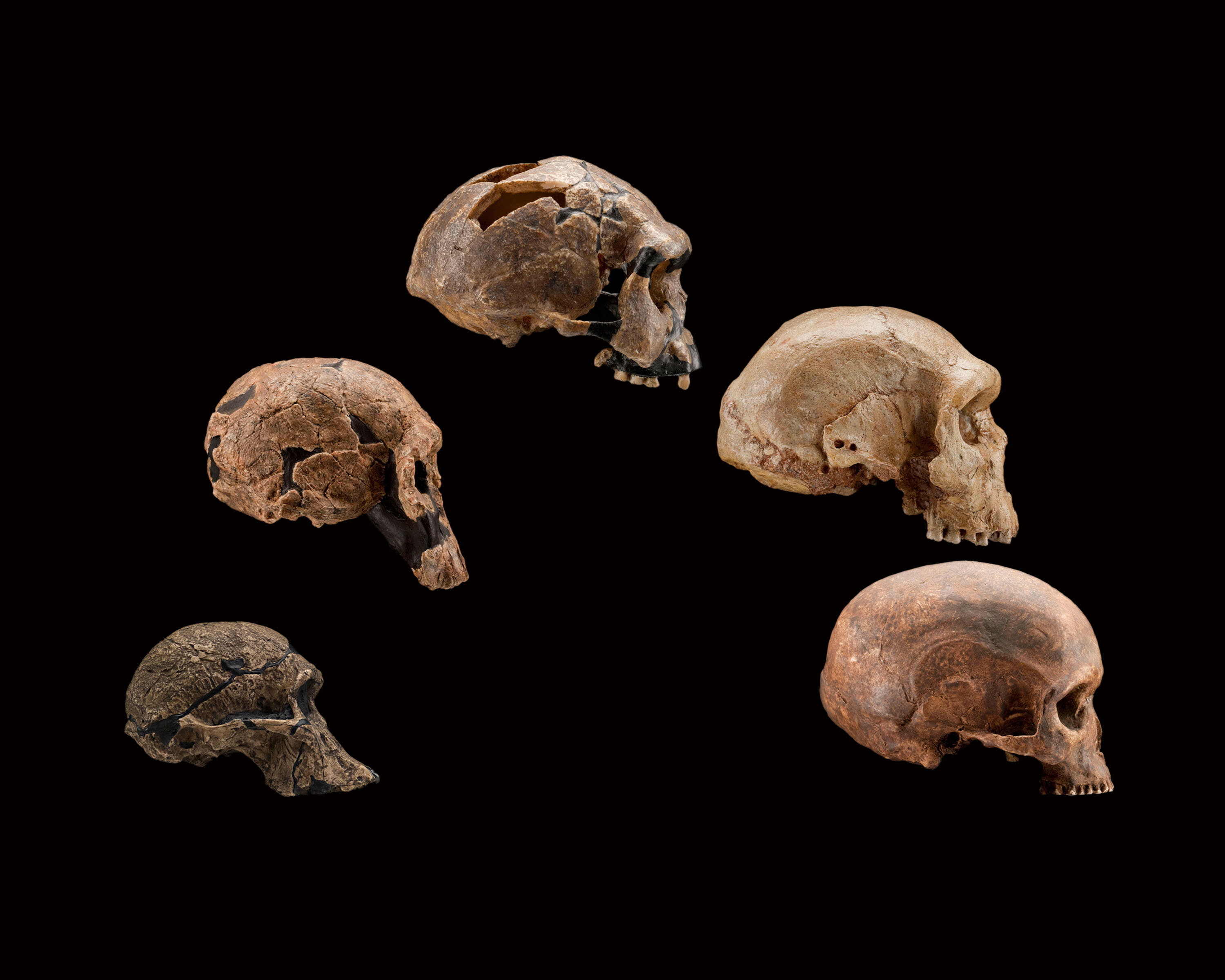
Five fossil human skulls  show how the shape of the face and braincase of early humans changed over the past 2.5 million years.

Five fossil human skulls show how the shape of the face and braincase of early humans changed over the past 2.5 million years.

How do you define human?!  Coinciding with the 100th anniversary of its official opening on the Mall, the National Museum of Natural History plans to open a new Hall of Human Origins based on decades of cutting-edge research by Smithsonian scientists.  Part of its broader “Human Origins: What Does it Mean to be Human?” initiative, the Hall transports visitors through a dramatic time tunnel depicting human life and environments over the past 6 million years.  The epic story of human evolution is told through the drama of climate change, and shows how survival and extinction have characterized our ancient human past. 

Forensically reconstructed faces of early humans, a display of more than 75 skulls, and an interactive 6 million-year-old family tree are highlights in the Hall.   Can’t visit?  Not to worry.  The Museum and National Geographic are publishing a book, What Does It Mean to be Human?; PBS will air a three-part series later in the year entitled, “Becoming Human: Unearthing Our Earliest Ancestors;” and the Museum will completely reproduce the exhibition through the Blue Mars virtual world website. 

As always, scholars, research and related collections are available to Affiliates for public or school programs, exhibitions, or however you spin your own human story.  Interested in collaborating?  Contact your outreach manager at affiliates@si.edu.

 So come by this spring to meet your ancient ancestors.  And be sure to wish them a happy birthday.

are you wendish?

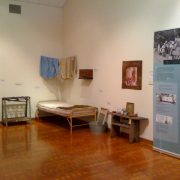
wendishThis question has been on my mind since visiting the Institute of Texan Cultures to announce our new affiliation on January 28, 2010.  Housed in the formidable Texas Pavilion, a landmark of San Antonio’s HemisFair Park, the Institute celebrates the diverse heritage of early Texans in its core exhibition, Texans One and All. Here one finds thoughtfully interpreted and artifact-filled displays of Mexican, African American, Czech, German, Jewish, and Lebanese Texans, among others, and…. Wends.
A quick survey of friends and Smithsonian savants revealed that I was not alone in my unfamiliarity with this group of Texans.  Wends it turns out are a Slavic people who began migrating into Germany and the Baltic region in the first millennium and have maintained their ethnic identity ever since.  The Wends of Texas, better known as Sorbs or Lusatian Serbs, first arrived in Texas in 1853, settling in German speaking areas, and eventually populating the towns of Serbin and Giddings.

itc

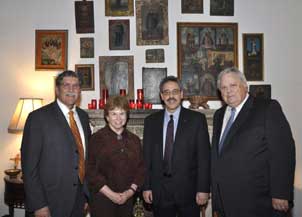
UTSA President Dr. Ricardo Romo; Dr. Harriett Romo Director of UTSA CAPRI/MEXICO CENTER; Harold Closter, Director of Smithsonian Affiliations and Tim Gette, Executive Director, ITC.

The Institute of Texan Cultures, organizer of the Texas Folklife Festival, served as a catalyst for the revitalization of Wendish culture in Texas through its annual call for festival participants, which helped to launch the Texas Wendish Heritage Society.  Today, according to the Institute, “the community at Serbin holds an annual Wendish Fest and extends a welcome, Witajcže K’nam, to visitors. During the affair church services are conducted in German and English, a Czech band may play, and corn-shucking contests are held. Some of the local descendants dress in European Wendish costume.”  The Institute emphasizes colorful Wendish wedding traditions in its display.

This is just one of the many stimulating encounters to be found at the Institute of Texan Cultures.  It is not surprising that a state with so much space and so many natural resources would be a magnet for so many different people.  Whether familiar or not, there is always much to learn about the heritage of our predecessors, and the adaptations and sacrifices made or forced upon them.  At the Texas banquet table, diversity is served in complex and compelling dishes.  There’s room for all at this enormous spread….including the Wendish.

gette_congressman

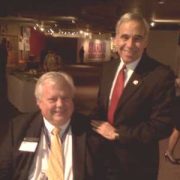
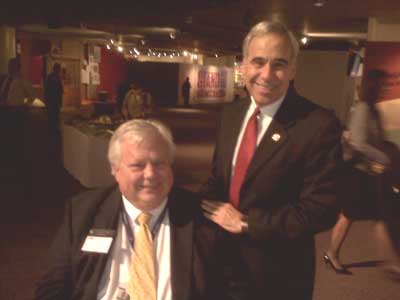
Tim Gette and Congressman Charles A. Gonzalez (TX-20) at ceremony announcing the affiliation between the Institute of Texan Cultures and the Smithsonian Institution.

Stop by the Institute of Texan Cultures when you are next in San Antonio and offer a hearty Witajcže K’nam.  They’ll know what you’re talking about.