Make the Smithsonian YOUR classroom.

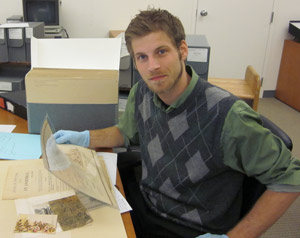
Eric Stanley (left) meeting with Peter Liebhold at the National Museum of American History.

In November 2010, the Sonoma County Museum (Santa Rosa, CA) opened the SITES exhibition Bittersweet Harvest: The Bracero Program, 1942-1964 and was ecstatic with the positive response within the local community.  The museum was able to share the bracero story so well in part due to curator Eric Stanley’s participation in the Affiliations Visiting Professionals Program.  Eric was able to meet with and learn from the Smithsonian curators who had planned programming for the original show, which inspired some facets of the installation at the museum, including a hands-on table at which visitors could try out some of the tools braceros used. In all, Eric met with more than 30 Smithsonian experts during his residency and said, “The time I spent with those individuals, each one knowledgeable, enthusiastic, and warmly receptive of my presence, was a tremendous benefit to me and my institution.” Read Eric’s guest blogs about the exhibition and his visiting professionals experience at the Smithsonian.  

Fall 2010 visiting professional, Silvia Ros from The Wolfsonian at Florida International University (Miami) worked at the National Museum of American Indian's Cultural Resources Center.

How can you apply for the Affiliations Visiting Professionals Program?

  • If you are a full-time Affiliate staff member looking to gain more experience in a certain area of interest for your museum, you’re eligible.
  • NEW THIS YEAR!- To help you coordinate your schedule with your sponsoring Affiliate museum, selected candidates have the opportunity to complete their program during any consecutive two-weeks beginning October 1, 2011 through September 30, 2012.
  • Affiliate organizations are still not responsible for providing a stipend!
  • Click here for application requirements.
  • Apply online by August 1, 2011!   

Annette Shumway interned at the National Postal Museum in 2010.

And perhaps you have an intern you’d like to recommend to spend a summer at the Smithsonian working on an area of interest for your museum? In 2010, the Frost Art Museum at Florida International University (Miami) recommended Annette Shumway for the Affiliations Intern Partnership Program.  Once accepted, Annette spent the summer at the National Postal Museum cataloging and digitizing the Postmaster General collection. During the second part of her internship back at the Frost, she piloted a digital imaging project involving the permanent collections, made recommendations for turning digitizing projects into programs at the Frost, and researched elements to include in an emergency management plan for the digital collection–all skills she was able to further practice after spending the summer at the Smithsonian.  And even better…Annette was HIRED by the National Postal Museum at the end of her internship and is now a staff member continuing her work on the Postmaster General collection! Read Annette’s blog about her internship experience at the Smithsonian.  
Shawn Pirelli, an intern partner from Plimoth Plantation (Plymouth, MA) researched at the NMAH Archives in 2010.

How can you recommend an intern for the 2012 Intern Partnership Program?

  • If you have an established relationship with a college or graduate student (prior/current intern or volunteer perhaps) and a specific project in mind for the intern to work on during the second half of their internship back at the Affiliate organization, direct them to apply online!
  • Interns will work in a more general area of interest while at the Smithsonian and on a more specific project back at the Affiliate organization during the second half of their program.
  • NEW! Affiliate organizations are no longer responsible for any of the intern stipend. Interns will receive a modest stipend from the Affiliations office for D.C. commuting expenses.
  • Interns can apply online! Note- Online registration for the 2012 summer program will not open in October 2011.
  • Click here for application requirements. 

Who can you contact with questions?  Elizabeth Bugbee, External Affairs and Professional Development Coordinator- (202) 633-5304, BugbeeE@si.edu.

For Jazz Appreciation Month, the Reginald F. Lewis Museum is the place to be

Special thanks for this guest post to Dr. David Taft Terry, Executive Director, at the Reginald F. Lewis Museum of Maryland African American History & Culture, a Smithsonian Affiliate in Baltimore, Maryland.  

Photo courtesy of the Baltimore Jazz Alliance.

April is Jazz Appreciation Month, and the Reginald F. Lewis Museum of Maryland African American History & Culture will celebrate this wonderful art form with great enthusiasm.  For more than a century, jazz has been the sound of democracy; it has grown and expanded as an expression of freedom around the world.  Drawn from African and European influences and developed in the distinctive historical milieu of the American Experience, jazz is “us” – all of us.  And, from ragtime to swing, bop to avante garde, Latin to contemporary, expressions of jazz are as diverse as the musicians that create it.  Jazz is my favorite music. 

Spice Band performs April 1, 2011. Photo courtesy of the band.

Maryland and her citizens have played critical roles in the development of jazz from its beginnings, and that influence continues to the present day: Eubie Blake, Cab Calloway, Chick Webb, Billie Holiday, Ethel Ennis, Lester Bowie, Winard Harper, Cyrus Chestnut, Dontae Winslow, Lafayette Gilchrist, Carl Grubbs – the list goes on!  You can learn about jazz history in Maryland in the “Pennsylvania Avenue” installation inside our Strength of the Mind gallery, one of the permanent galleries located on the third floor of our museum.  You can experience jazz live through our exciting Jazz Appreciation Month programs.   

I invite you to join us this April.  

Reginald F. Lewis Museum Jazz Appreciation Month Programs:

Friday, April 1, 7:30 p.m. 
FIRST FRIDAYS: Spice Band featuring Vocalist Debbie Poole
Poole brings her unique vocals to classic Phyllis Hyman songs such as “Meet Me on the Moon” and “The Answer Is You.”
Cost: $15 members, $20 non-members. Doors open at 7 p.m. Sponsored in part by AARP (includes light food and drinks) 

Saturday, April 16, 3 p.m.
Drama Presentation: “Satchmo and Baby Dolly”
Explore the special bond between early jazz greats Louis Armstrong and Baltimore native Blanche Calloway in this toe-tapping drama by Camay Calloway Murphy and Randy Smith.
Museum admission required. 

Saturday, April 30, Noon
SATURDAY’S CHILD: Music Program: Jazz for Kids (Ages 6-12)
Enjoy children’s songs performed by the Baltimore Jazz Alliance, and try jazz instruments including the flute, clarinet, saxophone, piano, bass and drums.
Museum admission required. 

Saturday, April 30, 2 p.m.
Book Talk: Music at the CrossRoads, Lives & Legacies of Baltimore Jazz
Uncover Baltimore’s rich jazz history with editor Mark Osteen, Loyola University professor and president of Baltimore Jazz Alliance, and co-writers Jennifer Margaret Nordmark and Bob Jacobsen.
Museum admission required. 

For more information, please visit our website.

For more information about JAM programs, visit the National Museum of American History’s Smithsonian Jazz website.

2011 affiliations conference: let’s eat!

More and more museums are exploring ways to use food and foodways as an extension of their missions, and as an additional pathway to community engagement.  (Here’s an example, and what some Affiliates are doing.)  Whether exploring historic and cultural traditions around food or promoting an agenda of sustainability, food is increasingly appearing in the repertoire of museum programming. And we know this issue carries national importance, as the American Association of Museums recently announced its collaborative proposal for Let’s Move Museums and Gardens as a way to address the First Lady’s focus on healthy, active lifestyles that incorporate good food.

At the National Museum of the American Indian, the Mitsitam Café (mitsitam means “Let’s Eat” in the local Piscataway and Delaware languages) is a prime example of how food allows visitors to “experience Native cultures and indigenous foods in ways that appeal to all the senses, transcending the limits of a museum exhibition,”  according to Museum Director, Kevin Gover.  Mitsitam Executive Chef Richard Hetzler researched indigenous foodways from five general cultural landscapes in North and South America as represented in the Museum’s collections.  The result is a seasonal menu (the entire café changes some of its dishes 4 times per year) that reflects the food available to Native Americans, and their attitudes toward preparing it.  Visitors see their tamales being made by hand and salmon roasting on an open fire pit – both ancient Native techniques.  The menus are updated and refreshed for the 21st century palette, but the food also finds its way to interpretative carts, festivals and public programs.  One cannot help feeling the connection to native culture that flows uninterrupted from the galleries to the café.

Using food as an interpretation tool will be the topic of a session at the annual Smithsonian Affiliations Conference this year, and what better time to do it than over breakfast?  NMAI Chef Richard Hetzler will prepare a dish from his internationally-acclaimed Mitsitam cookbook, while discussing the Museum’s philosophy toward foodways education.  Other Affiliates who are exploring this topic are welcome to share their programs at the session as well.  And of course, we’ll all enjoy a buffet of Native breakfast foods to get our creative juices flowing. 

Bon appétit!

To see the full agenda and to register for the 2011 Smithsonian Affiliations National Conference, click here.

happy 10th anniversary College Park Aviation Museum!

Congratulations to the College Park Aviation Museum on their 10th anniversary as a Smithsonian Affiliate!

Berliner helicopter on view at the College Park Aviation Museum in Maryland

Since their joining the Affiliations Program in March 2001, the Museum has been active in bringing important artifacts, speakers, and exhibitions from the National Museum of Air and Space to College Park, Maryland.  The Museum sits on the grounds of the world’s oldest continuously operating airport, which was founded in 1909 when Wilbur Wright established a flight instruction operation for the first military aviators.  Not surprisingly, the Museum displays Wright memorabilia on loan from the Smithsonian, including their pocket watch and a Medal of Congress.  The Museum also displays the impressive and historic Berliner helicopter, the product of an inventive father-and-son team to become the first Americans to make any significant progress towards the creation of a practical helicopter.

Over the years, the Museum has hosted Smithsonian exhibitions including SITES’ At the Controls, and NASM’s In Plane View and Fly Now!NASM’s Flight Posters.  They have  hosted Smithsonian speakers on a range of topics from women and African Americans in aviation to milestones in early aviation history.

Consider a trip to the Museum next time you’re in the D.C. area.  At just 8 miles away from downtown, visitors can experience this landmark of early aviation history, while seeing some Smithsonian treasures along the way.  Kudos to the College Park Aviation Museum for 10 years of collaboration, and here’s to many more years of our flying together!

National Youth Summit Flickr album

Thanks again to our fab-five Affiliate partners who engaged their local communities during the National Youth Summit: 50th Anniversary of the Freedom Rides. Our recent blog post highlighted what happened before the event, but now you can get a look at what happened during it through our Smithsonian Affiliates Flicker group album!  Want to add your photos? Join our Smithsonian Affiliates- National Youth Summit: Freedom Rides group and add them!

SITES in your neighborhood this spring

Smithsonian Affiliates across the country are bringing Smithsonian Institution Traveling Exhibition Service (SITES) exhibitions to their communities this spring. Here’s what’s opening at an Affiliate in the coming months: 

This 1929 photo shows P.E. Allen of the White House police force, trainer Harry Waters, and some of the White House dogs, although not Herbert Hoover’s personal favorite, King Tut. Photo by Herbert E. French, National Photo Company. Library of Congress.

March 19- May 29, 2011
Orange County Regional History Center(Orlando, Florida)
The Working White House: Two Centuries of Traditions and Memories
Two centuries of stories and traditions are preserved in this exhibition, developed with the Smithsonian Center for Folklife and Cultural Heritage and the White House Historical Association. Archival and contemporary images, videos, as well as fascinating oral histories of workers who have served presidents from William Taft through George W. Bush convey the occupational culture of this private yet public place.

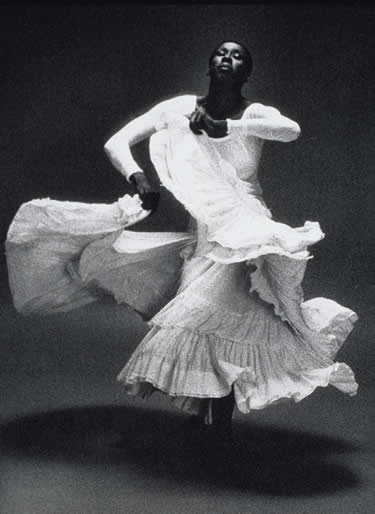
Judith Jamison in “Cry,” 1976, Max Waldman (1919 - 1981), National Portrait Gallery, Smithsonian Institution, Gift of Carol Greunke, Max Waldman Archives.

March 26 – June 19, 2011
National Underground Railroad Freedom Center (Cincinnati, Ohio)
Let Your Motto Be Resistance: African American Portraits
This inaugural exhibition of photographic portraits of African Americans explores the medium’s influential role in shaping public identity and individual notions of race and status over the past 150 years. The portrait subjects come from many sectors of the African American community, from Frederick Douglass, Sojourner Truth, and Edmonia Lewis, to W.E.B. Du Bois, Lorraine Hansberry, and Wynton Marsalis.

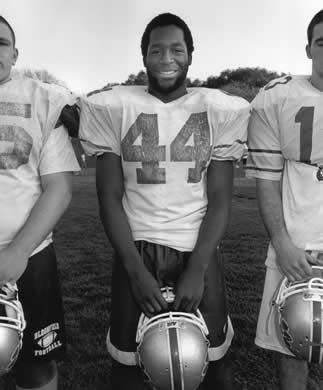
Portrait from Becoming American: Teenagers and Immigration. Photographs © Barbara Beirne

April 23 – July 17, 2011
The Charlotte Museum of History (Charlotte, North Carolina)
Becoming American: Teenagers & Immigration, Photographs by Barbara Beirne
In many ways, ours is a nation of immigrants–hungry for freedom, peace, and the opportunity promised by the American Dream. The realities of that immigrant experience are most vividly read in the faces and words of young people who have made this journey. In this exhibition, each sensitive portrait is paired with excerpts from Beirne’s interviews with teens from Latin America, the Caribbean, Europe, Africa, the Middle East, and Asia. All of their stories are unique, and we read in every quote–and in every face–the individual struggles and hopes of “becoming American.”

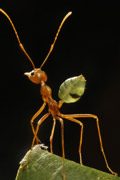
Farmers, Warriors, Builders: The Hidden Life of Ants.

April 30 – July 10, 2011
South Florida Museum and Parker Manatee Aquarium (Bradenton, Florida)
Farmers, Warriors, Builders: The Hidden Life of Ants
Small yet abundant, with complex and wildly diverse lifestyles, ants are everywhere, living lives mostly hidden from our view. What if we could see into their world. on their level? What would we learn? What parallels could we draw between them and us? Now, with the aid of a macro lens and the insights of ant expert and photographer Dr. Mark Moffett, SITES and the Smithsonian’s National Museum of Natural History present the world of ants.

And you can still catch these exhibitions at an Affiliate in your neighborhood:

Beyond Baseball: The Life of Roberto Clemente, at Challenger Learning Center of Arizona (Peoria, Arizona), through April 17, 2011.

Jim Henson’s Fantastic World, at Lakeview Museum of Arts and Sciences (Peoria, Illinois), through May 1, 2011.

Find a Smithsonian Affiliate in your neighborhood here.
Find more Smithsonian traveling exhibitions and programs here.