affiliates help smithsonian and MIT solve mysteries

Helping the Smithsonian solve a mystery about a fictitious environmental disaster – doesn’t that sound like fun? 

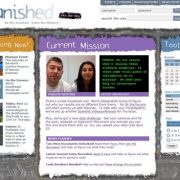
A preview look at the Vanished site, a curated alternate-reality game

Smithsonian scientists have teamed up with MIT’s Education Arcade to engage middle-school students to do just that, in an online alternate-reality game.   Vanished will kick off on April 4 at vanished.mit.edu.  In the course of 8 weeks, students ages 11-14 from all over the country will collect clues on- and off-line, and form a scientific community to help Smithsonian scientists test hypotheses and solve this mystery.  Thanks to the Smithsonian Center for Education and Museum Studies, a range of scientists from entomologists to paleontologists will host videoconference sessions with players, mentoring them through their scientific discoveries.  (Read more in this USA Today article.)

Where will students collect the real data from their hometowns, to share with Smithsonian scientists?  Many will look to their local Affiliate for clues.  According to MIT game designer Caitlin Feeley, “a kid in Kansas could go to the Kansas Cosmosphere in Hutchinson and bring back information on space exploration, and a kid in North Carolina could go to the Museum of Natural Sciences in Raleigh, walk through their incredible diorama, and bring back information on how a lost species massively affected an entire ecosystem.”  In fact, 17 Affiliate museums are partnering with the Smithsonian and MIT to offer clue-gathering opportunities for gamers.  “The Aerospace Museum of California is excited to partner with the Smithsonian and MIT in this unique educational opportunity,” says Linda Payne, the Museum’s Education Director.  “We are certain that Vanished will stimulate students’ interest in scientific exploration and problem solving.”

The game, made possible by a grant from the National Science Foundation, hopes to capitalize on the popularity of shows such as CSI to offer a specific kind of scientific problem-solving for students.  “The kids are actually doing science,” says Elizabeth Cottrell, Smithsonian geologist and director of the Smithsonian’s global volcanism program.  “They are going to have the ‘Ah, I get it,”. moment for themselves.”

Thanks to the Smithsonian Affiliates who will help students find those “Ah hah” moments… right in their own neighborhoods.

Affiliate partners for Vanished:
Mid-America Science Museum, Hot Springs, AR
Mary Brogan Museum of Art and Science, Tallahassee, FL
Buffalo Bill Historical Center, Cody, WY
Kansas Cosmosphere, Hutchinson, KS
The Museum of Flight, Seattle, WA
Schiele Museum of Natural History, Gastonia, NC
Aerospace Museum of California, McClellan, CA
Putnam Museum, Davenport, IA
Heinz History Center, Pittsburgh, PA
South Florida Museum, Bradenton, FL
Virginia Museum of Natural History, Martinsville, VA
Kenosha Public Museum, Kenosha, WI
Museum of the Rockies, Bozeman, MT
Museum of Dentistry, Baltimore, MD
South Carolina State Museum, Columbia, SC

“Vanished” in the news:
USA Today: Interactive game ‘Vanished’ doubles as an educational tool

ArtDaily.org: Smithsonian and MIT Partner to Turn Kids into Scientific Investigators

Wing Luke Museum and Kona Historical Society: 10 Years in Association with the Smithsonian

2011 is a big year for organizations–20 at the latest count–celebrating their 10th anniversary as Smithsonian Affiliates.  To honor these Affiliates we’ll be blogging monthly about each one as they reach this milestone.  

Two unique Smithsonian Affiliates celebrated 10 years of collaborating with the Smithsonian in February- Wing Luke Museum of the Asian Pacific American Experience (Seattle, WA) and Kona Historical Society (Captain Cook, HI). 

Pictured: Joshua Heim, Exhibits Developer and King Lau, Youth Participant, of the Wing Luke Asian Museum YouthCAN program with Michelle Obama. Courtesy IMLS.

Seattle, Washington, is home to the Wing Luke Museum of the Asian Pacific American Experience, better known as “The Wing,” the nation’s only museum devoted to the Asian Pacific American experience. Active participants in Smithsonian Magazine’s Museum Day each year, The Wing has also included programming from The Smithsonian Associates and brought Smithsonian Institution Traveling Exhibition Service exhibitions to their community. Recently, during a White House ceremony, First Lady Michelle Obama honored The Wing’s YouthCAN after school program with a prestigious national award for its impact in engaging young people in the arts and humanities.

Kona Coffee Living History Farm, courtesy Kona Historical Society.

Did you know the Smithsonian has Affiliates in Hawaii? The Kona Historical Society in Captain Cook, Hawaii, also celebrates its 10th anniversary in February. The society maintains two historic sites and the Jean Greenwell Archives, which boasts the largest photograph collection on the Big Island; over 140 maps; many rare and out-of-print books; historical records including manuscripts, pamphlets and oral history interviews; and films and videotapes of Kona. The Society is in the process of raising $1.5 million over the next three years to expand the Kona Coffee Living History Farm which will create a permanent exhibition space for “The Kona Coffee Story:  Along the Hawai’I Belt Road,” an award winning exhibition created in a partnership which included the Japanese American National Museum (another Smithsonian Affiliate) and which was donated to the Kona Historical Society.

So, Happy 10th anniversary to The Wing and Kona Historical Society! And here’s to many more years of collaboration.

affiliates in the news

Congratulations to these Smithsonian Affiliates making headlines this week! 

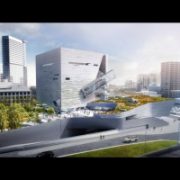
The $185-million museum, designed by Pritzker Prize Laureate Thom Mayne and his firm Morphosis, is scheduled to open early 2013.

Dallas Museum of Nature and Science(Dallas, TX)
Perot Museum of Nature & Science in Dallas Receives $25 Million Gift from The Rees-Jones Foundation. READ MORE 

National Museum of American Jewish History (Philadelphia, PA)
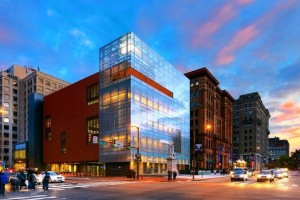
American Jews’ Story Told in a New Home
. READ MORE 

Northwest Museum of Arts and Culture (Spokane, WA)
Spokane organizations win Allen grants. READ MORE
Paul Allen gives MAC show of support. READ MORE 

Plimoth Plantation (Plymouth, MA)
We Still Live Here, An Interview with Anne Makepeace. READ MORE 

The exterior of the National Museum of American Jewish History. Photo by Jeff Goldberg

Conner Prairie(Fishers, IN)
Conner Prairie history park: Attendance grew in 2010. READ MORE

from airmail to email

Centennial Celebration of the Wiseman Cook Flight with Smithsonian Curators

Wiseman Cooke Plane on display at the National Postal Museum.

Centennial celebrations don’t happen every day.  When the Sonoma County Museum, an Affiliate in Santa Rosa, California, set out to host an event to commemorate the 100th anniversary of the first airmail flight, they turned to the Smithsonian curators who care for the event’s primary artifact, the plane that made that journey a century ago.  Together, they’ve organized a program that will connect online viewers and live audiences at the Sonoma County Museum and the National Air and Space Museum to celebrate this event.

The flight was piloted on February 17 and 18, 1911 by Fred Wiseman.  Wiseman took off from Petaluma, California and flew 25 miles to Santa Rosa with three letters.  Wiseman’s plane is part of the collections of the National Air and Space Museum and is currently on display at the National Postal Museum.  The event carries even more significance to the local community because the Sonoma County Museum is located in a building that was the Santa Rosa post office in 1911. 

During the program, Tom Crouch, senior curator, aeronautics, National Air and Space Museum and Nancy Pope, curator and historian at the National Postal Museum will share their knowledge about the flight.  Tom will discuss the historical context of the plane and Nancy will talk about its significance to postal history. 

Please join us on Saturday, February 19th at 2pm Eastern Standard Time at the Smithsonian’s Ustream channel, where online viewers can watch the lecture and email questions to both curators.   If you would like to organize a similar distance learning program, contact your national outreach manager.

An Affiliate journey through Smithsonian collections storage

Special thanks for this guest post to Latasha M. Richards, collections manager at York County Culture & Heritage Museums, a Smithsonian Affiliate in Rock Hill, South Carolina. 

The idea to visit the Smithsonian came to mind while I worked on ways to improve and better utilize the current collections storage space at the York County Culture & Heritage Museums (CHM).  As the collections manager for CHM, I knew such an opportunity to learn from Smithsonian staff would allow me to gain valuable information to help my museum move forward with its own ideas to renovate one of our current collections storage facilities. 

Emily Kaplan, conservator, at the NMAI Cultural Resources Center shows Latasha the textile storage units.

Anyone who has gone through this type of process, particularly when it calls for moving large amounts of the collection, knows what a challenge such projects present. From the beginning, the CHM collections staff decided that talking to other professionals who have gone through similar activities would be one of the best ways to get a clear picture of just what to expect from the process.  Thanks to CHM’s participation in the Smithsonian Affiliations program, I was able to do just that.

I contacted my Smithsonian Affiliations National Outreach Manager, Caroline Mah, to talk about our collections storage renovation project and just what I hoped to gain from a visit to the Smithsonian.  She worked hard to ensure that she had a clear understanding of just want I was hoping to see and learn, and was able to set up tours for me with staff at the National Museum of the American Indian Cultural Resources Center (NMAI) and the Smithsonian American Art Museum

Compact storage at NMAI Cultural Resources Center.

Caroline and I met Raj Solanki, registration loan specialist, and Emily Kaplan, conservator, at the NMAI Cultural Resources Center in Suitland, Maryland on the first day. After a tour of the collections space, they summarized their experiences moving the collection from its previous facilities and what they loved or would change about their building if given the chance.  They recommended using a bar code system to track objects during relocation, a system that proved to be a successful process for them.  Emily and Raj also made recommendations for various vendors and professionals that they worked with and sent me a copy of NMAI’s “The Move Procedure Manual” which details the procedures used in their move.

The next two days were spent at the American Art Museum’s two different storage facilities–one located near the museum in D.C., and the other a short distance away in Maryland. I met with Denise D. Wamaling, collections manager, and James Concha, collections manager for painting and sculpture.  Both had worked together when the American Art Museum had to relocate its collection to new facilities.  Denise and James oversee different aspects of the collection so the needs for their individual spaces were unique.  They emphasized how important it is to work as a team throughout the entire process because it made things run more smoothly.  Denise gave recommendations on how to plan the space by taping-off areas of the floor to represent where storage equipment and workspaces would be located as well as making life-size cutouts to make sure objects could be moved not only through doorways but also within the collections space as a whole.  When speaking with James, he emphasized just how important it was to manage workspace and supplies while moving.  He noted that things can get overwhelming with boxes, crates, and supplies everywhere and that it was important to coordinate when things were being moved and when the supplies would be available so that everything ran smoothly and efficiently. 

More compact storage at NMAI Cultural Resources Center.

Overall, the trip was incredibly helpful.  Some of the information was already somewhere in my thought process but in talking with other professionals who had actually gone through the experience it reaffirmed my ideas or recalled things to memory.  By touring all of the facilities, I saw different ways to store various objects that I had not thought of or seen before, which will be invaluable when it comes to planning our new space. I know I have options.  Lastly, I was so pleased and appreciative to the Smithsonian staff for not only taking the time to speak to me during the winter holiday season but with how generous they were with their knowledge.  I walked away from the experience with new contacts, lists of potential vendors and professionals that I can work with, and a reminder of just how small the museum community is and how important it is to share our thoughts and experiences with one another.

If you are an Affiliate staff member interested in planning something similar, contact your Smithsonian Affiliations National Outreach Manager for details.

it’s not too early to plan for jazz appreciation month!

The 2011 JAM poster featuring Mary Lou Williams

This April is the 10th Anniversary of Jazz Appreciation Month (JAM!)   As always, there are many ways to commemorate this unique American art form at your museum. 

Joann Stevens, program director for JAM Initiatives at the National Museum of American History (NMAH), shared information about the programs and resources available to help plan your Jazz Appreciation month event.  “This year JAM celebrates 10 years of advancing appreciation of jazz as America’s original music.  Smithsonian Affiliations has been a great partner in this mission.  Let’s work to strengthen our relationship in 2011 and beyond.  We invite you to order bulk copies of JAM posters for your programs  and send us information to promote your JAM museum and community events on the JAM website, and connect with us via social media.”

 JAM’s 2011 theme honors the history of overlooked musicians, “Women in Jazz: Transforming a Nation.”  The programs at NMAH will tell the story of the International Sweethearts of Rhythm, and their beginnings at Piney Woods School in Mississippi, “the school that music built.”  The Sweethearts gained global recognition as the nation’s first integrated female band, founded in 1937.  Like many other women at the time, the Sweethearts confronted dual biases of gender and race and excelled during a period in history when many Southern blacks lived in slavery without chains and women were second class citizens.  Another female jazz pioneer, Mary Lou Williams, is the face of this year’s celebrations; her portrait by Keith Henry Brown is the centerpiece for JAM’s poster. 

You can learn more about programming on the program’s website, facebook page and follow JAM on twitter.  And keep a lookout for a special webcast of a Latin jazz percussion workshop on April 7th. More details to come!

And don’t forget programming from a Smithsonian Affiliate in New York City, the Jazz Museum in Harlem.  Their executive director, Loren Schoenberg, is once again offering to lead a special program for Affiliates.  Learn more here.  

To get you in a Jazz mood and begin your programming, check out NMAH’s recent tribute blog to Billy Taylor, Jazz’ Elder Statesman.  Enjoy!