
Young Historians, Living History- Today’s Stop: Greensboro, NC!
Special thanks to Paula Lee, Smithsonian Affiliations intern, for this guest post. This is the second of a five-part blog series she is writing as part of the Young Historians, Living Histories (YHLH) collaboration with the Asian Pacific American Center and our Affiliate network.

Students of the Montagnard community proudly representing the Smithsonian Museum and Greensboro Historical Center
Greensboro, North Carolina is home to the largest Montagnard community living not only in the United States, but outside of Vietnam which makes Greensboro, a pretty big deal. Today I’ll share what the Young Historians, Living Histories project has enabled the Smithsonian and its collaborators to discover in the recent weeks! Dean Macleod, Curator of Education at the Greensboro Historical Museum (Greensboro, North Carolina), guided me through some fascinating facts about the Montagnard community that he learned through interacting with the community’s youth.
French for “mountain people,” the Montagnard (pronounced mon-tuhn-yahrd), are the indigenous people of the Central Highlands of Vietnam. Due to political, religious, and land disputes initiated by the Communist majority of North and South Vietnam, the natives were evacuated from the highlands at the end of the Vietnam War in 1975 through American efforts. The refugees began their resettlement to Greensboro, Raleigh and Charlotte, NC starting as early as 1986 in multiple but slow waves of immigration. There are as much as 9,000 Montagnard refugees in North Carolina with a majority in Greensboro, some of which have identified as Americans.

The diverse Montagnard youth unite to complete each role required for the interviewing processes.
With this in mind, Macleod approached the community with caution and respect and discovered that “the youth of the Montagnard community were thrilled that the Museum was engaging with them, and interested in digitizing their stories.” Although the 15 Montagnard students are of one community, they are unique to each other. Each student represented separate tribes as well as being refugees from different waves of immigration; some were born in Cambodia, others raised in Vietnam, and a few even born in America. Macleod remarks that the students’ involvement in the program was a way for them to feel like they were giving back for the sacrifices made by their ancestors.
The Montagnard stories in Greensboro even inspired other participating Affiliates to learn more. “I didn’t know anything about the Montagnard until hearing about this project. Thanks to the Greensboro Historical Museum, I’ve done a bit of research as a result,” said Shauna Tonkin, Director of Education at the Pacific Aviation Museum (Honolulu, Hawaii).
Because of this research, Greensboro Historical Center included the stories and artifacts in their Voices of a City: Greensboro North Carolina exhibition. This exhibit displays 300 years of local history that enlighten its viewers on the extraordinary stories that the city has to say about the community that shaped it.

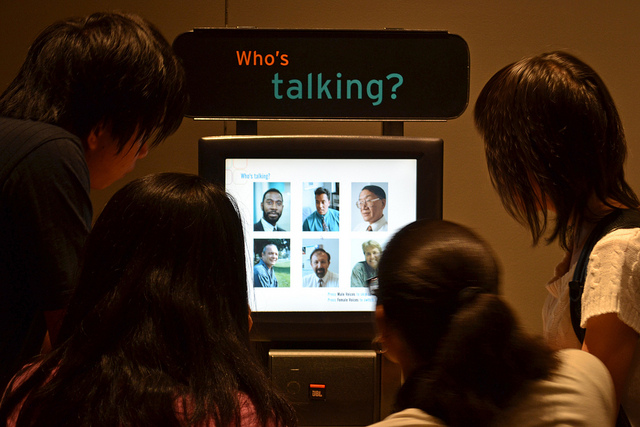
Voices of a City Exhibition. Photo courtesy Greensboro Historical Center
Don’t forget to check back, next week’s entry will highlight students in action as we step into the spotlight and begin filming and interviewing!
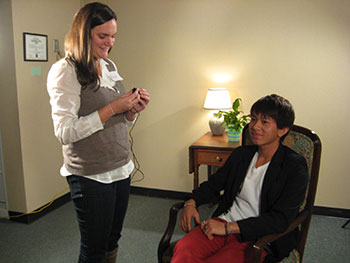
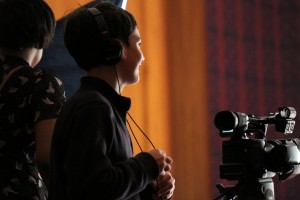
Mic check ! Let’s get these stories heard.

Students are using Mac OS Editing Software to edit their videos.
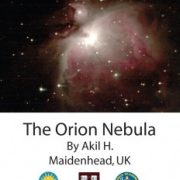
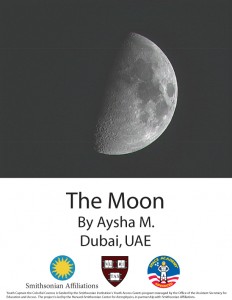 At the U.S. Space and Rocket Center® and Space Camp, we are constantly looking for fun and innovative ways to teach our museum guests and trainees about space history and the science and math concepts that surround it. Naturally, we were excited to participate in the Harvard-Smithsonian Center for Astrophysics series of instructional webinars in order to get some fresh ideas and content. The creativity started to flow as we reviewed the background material, but the amount and quality of the lesson plans and information presented to us by Mary Dussault and Erin Braswell was impressive. By the end of the first hour of the webinar, we had solid ideas and lesson plans that could be implemented in every program from summer Day Camp for 5-year-olds to Advanced Space Academy® for high-school seniors. And they meet both state and national curriculum guidelines! In this case, our target subject was astronomy.
 For our Advanced Academy (junior high to high school) trainees, we added an image processing component into our existing astronomy curriculum which is made up of four components. At the beginning of the week, the trainees participate in a lecture called “Exploring the Night Sky” where they learn the basics of astronomy and focus on finding and naming the constellations and deep space objects. Our second astronomy block is the “Micro Observatory Lab,” where our trainees use the Mobs software to compile full-color images of deep space objects. Our third astronomy block is a “Night Telescope” activity, where the trainees use real telescopes to find the same objects in the sky of which they compiled images the day before. And for our final astronomy block, our Advanced Academy trainees learn the stories behind selected constellations in our inflatable Star Lab.
 We have been running the “Micro Observatory Lab” astronomy block since December, 2011, and have had more than 1,500 trainees from all over the world participate. We have so many students participating that we aren’t able to display all their artwork at once, so we have set up two small rotating exhibits of 12 featured photos each here at the U.S. Space and Rocket Center, one located in the Main Museum and the other located in the Science Lab used for our summer Space Academy for Educators® camp, and we plan to add a third, larger display to our computer lab this summer.