*amazing* loans at Affiliates this fall

More than 25 amazing and unique artifacts are on the move from the Smithsonian to Affiliates in six states,  from September to November this year.  This concentration of extraordinary activity gives testament to months (and sometimes years!) of hard work and planning by Smithsonian and Affiliate staffs alike. 

“Americans unable to visit the Smithsonian in Washington now have an opportunity to see some amazing Smithsonian artifacts from our collections in their own communities,” said Harold Closter, Affiliations Director.  “Something special happens when an artifact returns to its location of origin or joins an exhibit where it can be seen in a new context. Thanks to our Affiliates, the Smithsonian has a strong, visible presence in every part of our country.”

From the NATIONAL MUSEUM OF NATURAL HISTORY:

Lexington's skeletal head, next to its image while alive.

The fall season kicked off in Kentucky, site of the 2010 World Equestrian Games.  The International Museum of the Horse borrowed the complete skeleton of Lexington, the most famous 19th-century American racehorse, returning him to his birthplace 160 years later.   Read more about this amazing loan in the upcoming Fall 2010 edition of The Affiliate newsletter. 

Isn’t Monopoly the way most of us learned about finance and economics?  A solid gold, jewel-encrusted Monopoly game from the Museum’s gem collection was unveiled with great fanfare in October at the Museum of American Finance on Wall Street in New York City.  While students competed in a Monopoly tournament, the artifact’s creator, jeweler Sidney Mobell, spoke about this one-of-a-kind artwork.   

From the SMITHSONIAN AMERICAN ART MUSEUM: 

Barthe's almost 3' Blackberry Woman

Artist Richmond Barthe’s bronze sculpture Blackberry Woman will soon be on view at the Ohr-O’Keefe Museum in Biloxi, Mississippi for the inaugural exhibition in its new African American gallery.  Barthe grew up in Mississippi, and was inspired by the women he encountered there in his childhood.  How elegantly appropriate for this sculpture to return to the genesis of its inspiration!

In November, the Museo de Arte de Puerto Rico will display three paintings from SAAM’s Vidal Collection by legendary 18- 19th-century Puerto Rican Old Master, José Campeche.  These inclusions in a definitive retrospective of Campeche’s work represent the first loans ever between these two important art museums, a signficiant accomplishment.

Likewise, SAAM’s painting by Charmion von Wiegand “Nothing that is wrong in principle can be right in practice” will be part of the Rubin Museum’s Grain of Emptiness: Buddhism-inspired Contemporary Art exhibition, the Museum’s first loan to this NYC Affiliate.

 From the ARCHIVES CENTER at the National Museum of American History:  

Detail from the illustrated sheet music, Oh! You Babe Ruth

The Archives Center is making a significant contribution to the Sousa Archives and Center for American Music’s Sousa and His League of Players: America’s Music and the Golden Age of Baseball exhibition, marking the 100th anniversary of the Sousa Band’s World Tour.  With 11 baseball cards (including Ty Cobb’s) and several examples of illustrated sheet music (including Oh! You Babe Ruth and Stars of the National Game music), this exhibition will be the core of the University’s 2010 American Music Month Celebration.

From the NATIONAL MUSEUM OF THE AMERICAN INDIAN:

In an unexpected request, the Museum has loaned a 19th-century Sioux flute and hide scraper from the Dakota Territory to the National Museum of American Jewish History.  What’s the connection?  When NMAJH opens its brand new building on Independence Mall this November, part of the history it will tell is the western expansion of Jewish Americans, and the kinds of peoples and objects they encountered along the way.   

And from the MUSEUM CONSERVATION INSTITUTE:

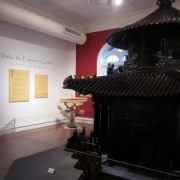
Within the Emperor's Garden - on view at Flushing Town Hall

MCI’s extraordinary object, the Ten Thousand Springs Pavilion, made its way between two Affiliates this fall, from Texas to Flushing, New York.  Flushing Town Hall is located in one of New York City’s largest Asian communities, a perfect context for this 1:5 scale model replica from the Imperial Garden in the Forbidden City in Bejing.  Read more about the deinstallation and NYC installation of this object.

THANK YOU to all of our Smithsonian colleagues for their work on these loans, and for our Affiliate friends who so consistently collaborate with us to bring the Smithsonian to their neighborhoods.

Smithsonian Affiliate provides peek into an internet-free time in history

Special thanks to Alma Douglas, Smithsonian Affiliations National Outreach Manager, for this post.

“What did you people do before the internet?” It was a question that produced a hilarious moment for Smithsonian staff this summer when asked by one of this year’s young ambassadors, hosted by the Smithsonian Latino Center.   

Historic building with sheep at the Museum of Appalachia

Visiting one of our Affiliates, the Museum of Appalachia in Norris, TN, gives a clue.  This museum presents a stunning time travel experience as it presents Appalachian cultural heritage. 

Founder John Rice Irwin has assembled an amazing collection of objects of everyday life, photographs, and buildings which convey the way life as was lived in Appalachia once upon a time.  Authentic log cabin housing, a one-room school house, outdoor kitchens, meat houses,  handmade tools and musical instruments, even the proverbial out house, are represented in the museum’s collections.  Necessity, invention, and imagination joined forces to create some very unique objects that eased the way of living and provided joyful relief for Appalachian families. 

Authentic out house at the Museum of Appalachia.

Just imagine banjos and guitars of every shape and design, made with whatever might have been available at the time–creating a new art form, the stirrings of country music, to warm the heart and soul.   Soap made from hog renderings, houses to cure meats so it could last for a time, canning so that families could eat long after the harvest, shearing sheep and spinning the wool to make fabric for clothing, all done by hand.  Lamps lit by tallow, hearth baking, lumber cut at the saw mill.    

The annual, upcoming Tennessee Fall Homecoming, October 8-10, 2010 is a wonderful celebration of the Apppalachian culture which immerses you in that time and place.  What might that young intern think after this experience?    

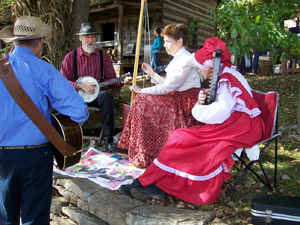
Demonstration of Appalachian music by performers in period dress at the Museum of Appalachia.

You can learn more about Appalachian traditions in the television documentary program “Heartland Series,” airing in 2010. Several episodes were filmed at the Museum of Appalachia.

Kentucky welcomes iconic Lexington home again

Special thanks to Alma Douglas, Smithsonian Affiliations National Outreach Manager, for this post.

It took several years of negotiations to determine the feasibility of loaning a 135 year-old skeleton of a horse to the International Museum of the Horse in Lexington, KY, but it finally happened in August.

Thomas J. Scott, Portrait of Lexington, 1888, oil on canvas mounted on fiberboard, sight 24 1/8 x 34 3/8 in. (61.3 x 87.4 cm.). Smithsonian American Art Museum Gift of Mr. and Mrs. David K. Anderson, Martha Jackson Memorial Collection. This portrait is on view at the Headley-Whitney Museum, another Smithsonian Affiliate in Lexington, KY.

Lexington, a beautiful bay, was one of America’s and some would say one of the world’s greatest racing champions. He was born in 1850 as Darley and renamed in 1853.  He won six races out of seven in addition to what was considered to be the greatest match race of the 19th century.  Lexington was also raced against the clock to produce a speed record that held for over 20 years — four miles in seven minutes, 19 ¾ seconds.  Forced to retire because he was going blind, Lexington was a leading sire who produced a record number of champions over the course of 16 years.  After his death, Lexington’s bones were donated to the Smithsonian and placed on exhibit.

In 1998, Carlene Stephens, a curator at the National Museum of American History, related the significance of horse racing, where races are won by tenths of seconds, to the subject of time while working on the Timex sponsored “On Time” exhibition.  Lexington was featured in the exhibition.  When “On Time” was de-installed, the skeleton went back into storage.

Interest was rekindled in bringing Lexington back to Kentucky by William Cooke, Executive Director of the International Museum of the Horse. Kudos to the team, headed by Linda Gordon, Collections Manager, Department of Mammals, National Museum of Natural History; Ed Ryan, Assistant Registrar and Carol Slatick, Outgoing Loans Coordinator, National Museum of American History, who worked seamlessly together to coordinate the loan.

Lexington’s skeleton, fully assembled, at the International Museum of the Horse. Photo by James Shambhu.

Lexington stands as an iconic symbol for Bluegrass Country.  His image is found throughout Lexington, KY in celebration of his greatness.  Packed and crated gently for the long ride, the skeleton is now on display at the International Museum of the Horse, along with a full view of his portrait.  As thousands of horse enthusiasts from across the country and around the world visit Kentucky for the 2010 Alltech FEI World Equestrian Games, Lexington will be “in the house.”

affiliates in the news: week of september 27

Congratulations to these Affiliates making headlines this week!

Discovery Science Center (Santa Ana, CA)
Best of Orange County 2010 Winners. READ MORE 

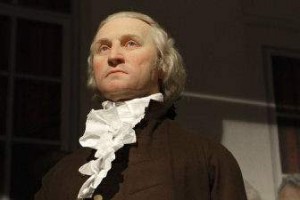
A life-size wax figure of George Washington appears in the “Discover the Real George Washington: New Views from Mount Vernon” exhibit at the North Carolina Museum of History in Raleigh, N.C. By The Associated Press

North Carolina Museum of History (Raleigh, NC)
There’s the George Washington made famous in the Gilbert Stuart portrait found in many elementary schools and, in engraved fashion, on the $1-dollar bill: a severe man, whose severity is accentuated by thin, taut lips. READ MORE

St. Augustine Lighthouse & Museum (St. Augustine, FL)
Richard Willich pledges $50,000 to maritime group. READ MORE

Smithsonian Cup goes on display at Lizzadro Museum of Lapidary Art in Elmhurst, Illinois. The cup was designed by Gianmaria Buccellati and donated to the National museum of Natural History in 2000. The cup is only on view at the museum until October 10, 2010.

Durham Museum (Omaha, NE)
Be one of the first to see Dig It! The Secrets of Soil created by the Smithsonian’s National Museum of Natural History. READ MORE
Get the dirt on something we just can’t live without. READ MORE

The National Jazz Museum in Harlem (New York, NY)
Historic music find ‘redefines’ swing era jazz. READ MORE

International Storytelling Center (Jonesborough, TN)
The world’s premier storytellers will take the stage in Jonesborough the weekend of Oct. 1-3, 2010, as Tennessee’s oldest town plays host to the 38th annual National Storytelling Festival. READ MORE

“Dig It! The Secrets of Soil” opens at the Durham Museum on October 2.

Kudos! October 2010

In these times of economic challenges, it’s nice to see some bright spots!

Lakeview Museum of Arts and Sciences (Peoria, Illinois) has been awarded a $10,000 Arts Education Invitational Grants Initiative grant from the National Endowment for the Arts to digitize the Picture Person Program, an art appreciation outreach program in which parent volunteers borrow art kits from the Museum and present them in K-6 classrooms monthly throughout the school year.

The Long Island Museum in Stony Brook (Long island, New York) announced it has received accreditation from the American Association of Museums, the highest honor awarded by the national organization.

The PNC Foundation announced $3 million in grants to four of Chicago’s premier institutions including the Adler Planetarium, to enhance science education for underserved students in preschool programs operated by Chicago Public Schools and the Big Shoulders Fund.

The Putnam Museum and IMAX Theatre (Davenport, Iowa) won RK Dixon’s Make My Nonprofit Run Better contest and a $20,000 grand prize of an office technology makeover. 

si authors on the road

Just in time for the holidays, two new books featuring the Smithsonian will be available this fall, with authors ready to travel to Affiliates for programs and book signings.  For more information or to pursue a booking, please contact us at affiliates@si.edu.

NMAI's new cookbook features historical descriptions and artifact links

Mitsitam = Let’s Eat! 

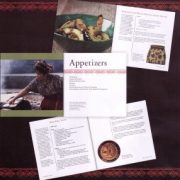
The Mitsitam Café Cookbook documents America’s truly indigenous foods, as featured at the National Museum of the American Indian (NMAI).    Anyone who has visited this groundbreaking museum resource – a destination in its own right – knows that the Native story told in the Museum’s galleries is brilliantly complemented by the culinary traditions available to savor in the museum’s café.  Written by the Mitsitam café’s executive chef Richard Hetzler, this cookbook showcases 90 home-tested recipes.  Each dish was researched and developed to highlight indigenous foods that are the staples of five Native American regions in North and South America.  The book features a historical description for each of these recipes that have been enjoyed by NMAI visitors since its opening in 2004.  In addition, images of artifacts from NMAI’s collection, as they pertain to Native foodways, appear throughout.

Richard Hetzler is available to travel to Affiliates for book signings, and can talk about a range of topics, including preparing food from Native ingredients and traditions; developing a local seasonal menu;   developing the café’s concept with Museum staff, and more.  Program ideas could range from a simple lecture and cooking demonstration, to a cooking class, or a “meet/eat with the chef” meal for your members, or a dialogue with a content specialist from your museum or region.   

NASM's Autobiography, coming out October 2010

A Soaring Museum and its Treasures 

The Smithsonian’s National Air and Space Museum (NASM) welcomes eight million visitors a year and holds vast collections of aircraft, rockets, spacecraft, and related artifacts–so many, in fact, that they all add up to the world’s largest aerospace collection.  Smithsonian National Air and Space Museum: An Autobiography is the first and only complete history and behind-the scenes tour of this great museum.

 Beautifully illustrated with over 70 photographs and artworks, and engagingly telling the history of 150 years of flight development, the Autobiography does full justice to the soaring museum and its treasures.  Written by curators and scientists who protect and work with these collections, the book reveals the stories of many of the artifacts.  It shares the untold narratives between the Smithsonian Institution and the heroes working in the fields of aeronautics and space exploration.  In addition, innovative features have been specially designed for this book, including “Superlatives”–record makers and record breakers; and “Curator’s Choice” – selected objects deemed most fascinating.

The book was edited by Michael J. Neufeld, chair of the Space History Division at NASM.  Michael Neufeld is available to visit Affiliates to discuss and sign this extraordinary book, at once a stunning keepsake of a world-class museum experience, a fitting tribute to the legends of aviation, and a colorful resource on the history of flight.