affiliates in the news: week of August 30

Congratulations to these Affiliates making headlines this week!

Center for the History of Psychology (Akron, Ohio) 

Image courtesy Smithsonian Affiliations.

UA’s high-minded gallery opens: Home movie starring Freud, doll used in aggression study are among items on display in psychology history center. READ MORE 

The new Center for the History of Psychology opens Monday at the University of Akron. READ MORE 

VIDEO- UA opens its Center for the History of Psychology. READ MORE 


Birmingham Civil Rights Institute (Birmingham, Alabama)

“Let Your Motto Be Resistance” Opens August 28, 2010 at the Birmingham Civil Rights Institute
 

VIDEOS- “Let Your Motto Be Resistance: African American Portraits” exhibition opens at Birmingham Civil Rights Institute. READ MORE. and MORE 

BLOG- Birmingham Civil Rights Institute prepares for Smithsonian exhibit (with video). READ MORE 

International Museum of the Horse (Lexington, Kentucky)  


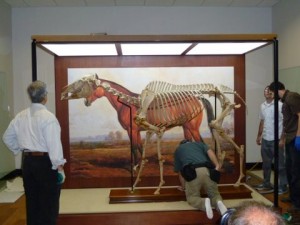
Image courtesy International Museum of the Horse.

The skeleton of famous race horse “Lexington” was returned to his birthplace Tuesday

. READ MORE 

Lexington has returned to Lexington. READ MORE 

More than one hundred years after his death, a legendary horse is back in Lexington, Kentucky. READ MORE 

Buffalo Bill Historical Center (Cody, Wyoming) 

While survivors of the January earthquakes in Haiti were still searching the rubble for the bodies of loved ones, Buffalo Bill Historical Center conservator Beverly Perkins was picking through the ruins for the treasures of Haitian culture. READ MORE

Photo courtesy Beverly Perkins, Buffalo Bill Historical Center.

Smithsonian Affiliate staff member helps in Haiti recovery project

Special thanks to Beverly N. Perkins, conservator at Buffalo Bill Historical Center in Cody, Wyoming, for this guest post. 

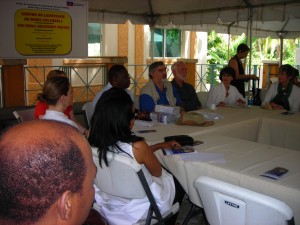
AIC-CERT members, Smithsonian Secretary G. Wayne Clough and Under Secretary for History, Art and Culture, Richard Kurin, the President's Committee on the Arts and Humanities, and CRCH members meeting to discuss recovery projects. Photo by Beverly Perkins.

Three American Institute for Conservation-Collections Emergency Response Team (AIC-CERT) members were asked to join the Smithsonian Haiti Cultural Recovery Project on July 4th, 2010.  Beverly Perkins, Karen Pavelka, and David Goist spent some time with the staff of the Centre de Sauvetage de Biens Culturels(CRCH) helping to set up the CRCH labs so that they can be used for conservation treatments and to train Haitians in the recovery of cultural collections.  Under the supervision of Project Manager, Stephanie Hornbeck, the visiting conservators also carried out conservation projects and helped to guide tours of the labs.  

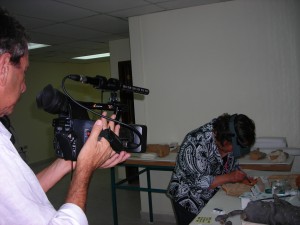
Conservation projects at work in the lab. Photo by Beverly Perkins.

A project I worked on involved conserving ceramics and building elements as they began to come in to the lab from various sites in Haiti.  Some of the ceramics had been clumsily reassembled at some point in their past, prior to being brought to the conservation center.  One group ceramics from a nativity scene were considered to be more decorative than historical, and so the losses were filled and shaped to replicate the pieces that had been lost.  These new elements were then toned with paints to make the ceramic appear to be whole again.  All of the treatments are documented with written notes and photographs so that in the future our work may be easily distinguished from the original ceramic.

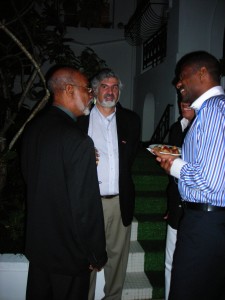
Richard Kurin and guests at a reception at the President and Mrs. Preval's home. Photo by Beverly Perkins.

Also during our stay, the United States President’s Committee for the Arts and Humanities visited Haiti, along with dignitaries from the Smithsonian and The Broadway League. The meetings held with Haitian cultural leaders helped to strengthen the determination to salvage cultural collections and train Haitians in that salvage effort.  The visiting dignitaries, AIC-CERT volunteers, and the staff of the CRCH were treated to an evening of Haitian song and dance at President and Mrs. Preval’s lovely home. 

The ten days I spent away from the Buffalo Bill Historical Center, a Smithsonian Affiliate, were donated in the spirit of good will from the Museum’s board and staff and the people of Cody, Wyoming to the people of Haiti.  Upon my return from Haiti, the Museum’s director, Bruce Eldredge asked how we could further be of assistance to the people of Haiti.  He developed a plan to offer training for one or two Haitians in the conservation laboratory of the Buffalo Bill Historical Center. He further offered to provide support following those months of training.

This project is in the process of being formed, and so the story continues…

Devastation to a cathedral in Haiti. Photo by Beverly Perkins.

affiliates in the news: week of august 23

Congratulations to these Affiliates making headlines this week!

Georgia Aquarium (Atlanta, GA)


The Georgia Aquarium is officially the world’s largest fish tank. READ MORE

The Georgia Aquarium is officially the world’s largest, after a certificate presentation by Guinness World Records Sunday. READ MORE

National Jazz Museum in Harlem (New York, NY)

For jazz fans, nothing could be more tantalizing than the excerpts made available by the National Jazz Museum in Harlem of newly discovered recordings from the 1930s and ’40s. READ MORE

Q&A: National Jazz Museum Director on the Newly Discovered Trove of Jazz Greats- The director of the National Jazz Museum in Harlem discusses new music by Count Basie, Lester Young, and others. READ MORE

Audio Exclusive: Eight Never-Before-Heard Clips from America’s Jazz Greats- The National Jazz Museum shares part of its new treasure trove with NEWSWEEK. READ MORE

Kona Historical Society (Kona, HI)

Several nonprofit organizations, a state agency and three local counties have been awarded $3.3 million from a state land preservation fund to protect 753 acres on the Big Island, Kauai, Molokai and Oahu. READ MORE. and MORE

Buffalo Bill Historical Center (Cody, WY)


Annie Oakley has been portrayed in popular culture as everything from a rough tomboy to a preening princess, but 150 years after her birth, one historian says a more nuanced look at the famed sharpshooter shows her to be a complex woman who defies categorization. READ MORE

Center for the History of Psychology (Akron, OH)

Students, researchers and the general public soon will be able to experience the history of psychology in a museum setting at The University of Akron’s (UA) new Center for the History of Psychology (CHP), which opens to the public Aug. 30. READ MORE

National World War II Museum (New Orleans, LA)

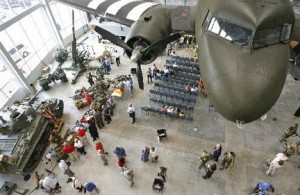
Construction of the $35 million U.S. Freedom Pavilion: Land, Sea and Air will be formally announced Friday as part of the museum’s overall $300 million expansion. READ MORE

Affiliates collaborate with AAM to offer webinar

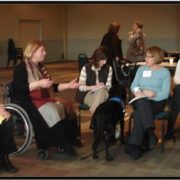
Beth Ziebarth, Director of the Smithsonian Accessibility Program, discusses Universal Design principles with museum peers.

The museum profession is well-acquainted with requirements in the Americans with Disabilities Act – for ramps, accessible restrooms, and other physical infrastructure needs – but how about for exhibitions and public programs?  

This will be a topic of discussion in an upcoming webinar entitled Universal Design: Beyond the Americans with Disabilities Act on Wednesday, October 27.  In a unique onsite-online learning model, Affiliations has teamed up with the American Association of Museums(AAM) to offer opportunites for museum professionals around the country to come together to experience the webinar.  25 Affiliates(in 21 states and Puerto Rico) will serve as “host sites”for their peers to network, watch the webinar together, and engage in moderated discussions about the specific implications of universal design for their museums and communities.

“Planning a program using a universal design perspective is different from designing a program for the deaf, for example,” says Beth Ziebarth, Director of the Smithsonian’s Accessibility Program, and main webinar presenter.  Most simply, universal design is human-centered design, a user-friendly approach to the design of environments that are accessible to people of any culture, age, size, weight, race, gender and ability.   Designing with such an approach is not only beneficial for people with disabilities, but for multi-generational families, pregnant women, the elderly and more.  The webinar will explore integrating universal design into exhibitions and public programs; engaging your local disability community to inform program designs; and developing resources to share across a community’s cultural organizations.

We saw the power of this shared learning approach first-hand.  In March 2009, Beth led a training seminar for cultural leaders in Pittsburgh at the Heinz History Center.  About 60 professionals from the city’s museums, historical societies, theaters, operas, art galleries and more, spent a morning discussing their particular accessibility issues.  By sharing successes and challenges, they were able to brainstorm collaborative and cost-saving possibilities for solutions – i.e., sharing the costs of an LED reader or mobile assistive-listening device, to make it more affordable for several organizations.  Since then, the participants have created an accessibility task force that meets quarterly in an effort to make Pittsburgh’s cultural attractions even more accessible to everyone.

AAM is the perfect partner to help take the Pittsburgh example to a national scale.  Their popular, high-quality professional development webinar series reaches thousands of museum professionals each year.  Together, we can deliver Smithsonian expertise to a broad audience of museum peers and disability advocates throughout the country.  We are all very grateful to the Smithsonian Women’s Committee for funding this collaboration experiment.

So head to your local Affiliate this fall and join the conversation!

Affiliate host sites:
Birmingham Civil Rights Institute, Birmingham, AL
Arizona State Museum, Tuscon, AZ
San Diego Air & Space Museum, San Diego, CA
Riverside Metropolitan Museum, Riverside, CA
History Colorado, Denver, CO
Frost Art Museum, Miami, FL
Orange County Regional History Center, Orlando, FL
Georgia Aquarium, Atlanta, GA
Conner Prairie, Fishers, IN
Frazier International History Museum, Louisville, KY
National World War II Museum, New Orleans, LA
Lowell National Historical Park, Lowell, MA
Reginald F. Lewis Museum, Baltimore, MD
North Carolina Museum of History, Raleigh, NC
Atomic Testing Museum, Las Vegas, NV
Yeshiva University Museum, New York, NY
Archives of the History of American Psychology, Akron, OH
Oklahoma Museum of History, Oklahoma City, OK
Senator John Heinz History Center, Pittsburgh, PA
Museo de Arte de Puerto Rico, San Juan, PR
Culture and Heritage Museums, Rock Hill, SC
The Women’s Museum, Dallas, TX
Institute of Texan Cultures, San Antonio, TX
Virginia Museum of Natural History, Martinsville, VA
Museum of History & Industry, Seattle, WA

There are two ways to register:
1) Contact affiliates@si.edu or visit the Affiliations website to get a list of contacts at each Affiliate host site.  Register directly with them to attend at their site, and receive a discounted registration fee of $15.

2) Register directly through AAM and watch the webinar online, https://www.aam-us.org/getinvolved/learn/universaldesign.cfm        

Affiliate collections on View at the Smithsonian

With more than an estimated 137 million artifacts, 19 museums, galleries and the National Zoological Park, one may think that there’s not a lot that the Smithsonian doesn’t have.  But Smithsonian curators and researchers frequently reach out to other experts, borrowing objects to complement Smithsonian exhibitions.     

Smithsonian Affiliations promotes the mutual sharing of ideas and expertise; and Smithsonian Affiliates are proud to help when called upon.  Currently, five Smithsonian Affiliates have objects and images from their collections on view in Smithsonian exhibitions.  So what’s out there?

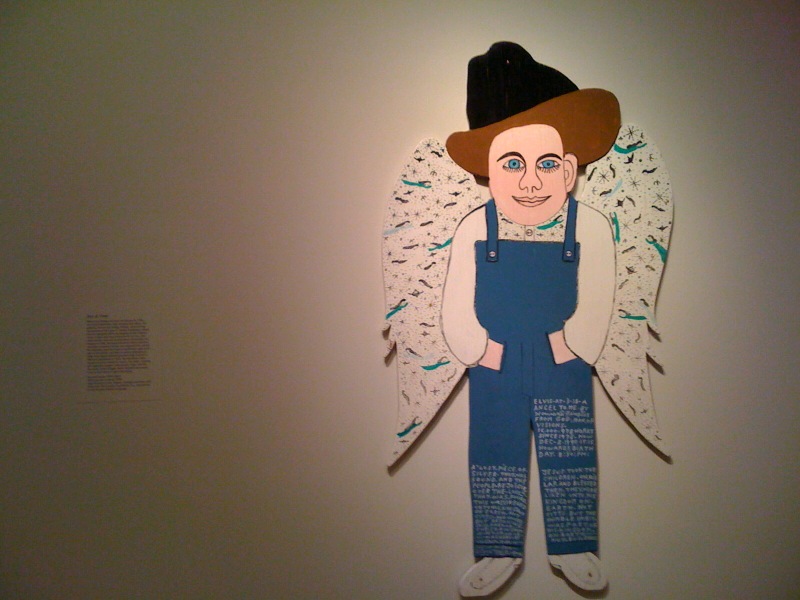
Elvis at Three by Howard Finster on display at the National Portrait Gallery. High Museum of Art

At the National Portrait Gallery, One Life: Echoes of Elvis commemorates the 75th anniversary of Elvis Presley’s birth.  The High Museum of Art (Atlanta, GA) lent two paintings by Howard Finster to tell the story of this iconic American, as popular today as he was during his lifetime.  The exhibition’s curator, Warren Perry, explains the importance of the High’s contribution: “The mission behind our Elvis show was to find works that paid tribute to Elvis since his death.  Howard Finster’s work–he began painting images of Elvis shortly after Elvis died–fit the bill exactly, if not to the extreme.  Finster believed that Elvis was an emissary of God and often he painted him as such, as we see in the High Museum’s portrait of Elvis with angel’s wings.  The composition of these pieces is wonderful; Finster’s appreciation of Elvis exudes from them both. I am really grateful to the High Museum for making these works available to us.”

Objects related to the "Spruce Goose" from the Evergreen Aviation and Space Museum, on view at the National Air & Space Museum

Objects from the Evergreen Aviation and Space Museum (McMinnville, OR) help tell the story of another legendary American, Howard Hughes.  The Hughes H-4 Hercules aircraft (nicknamed the “Spruce Goose”) was built during World War II to transport materials.  As wartime rations limited the use of metal, the massive aircraft was mostly built of wood; its wingspan is still the largest of any aircraft in history.  While the “Spruce Goose” is on display at the Evergreen in Oregon, objects related to its groundbreaking construction are on view at the National Air and Space Museum.   Chris Moore, Museum Specialist in the Aeronautics Division at the Air and Space Museum said, “The exhibit includes objects related to the aircraft’s manufacture. We don’t have any artifacts from the aircraft in our collection, so borrowing them allowed us to tell a story we could otherwise not have told.”

The Japanese American National Museum (Los Angeles, CA) lent three artifacts to The Art of Gaman: Arts and Crafts from the Japanese American Internment Camps, 1942-1946, organized by author and guest curator, Delphine Hirasuna“The Japanese American National Museum was pleased to lend artifacts from its extensive permanent collection to the traveling exhibition, The Art of Gaman,” stated National Museum President & CEO Akemi Kikumura Yano. “Delphine Hirasuna’s work in exploring the cultural connections between the objects and art created in the camps by the inmates helps to illuminate the spirit of those falsely incarcerated. As an Affiliate, the Japanese American National Museum was delighted to collaborate with this show and the Renwick Gallery, since all parties seek to explore and share this important chapter of U.S. history.”

Mother in Jerome Camp, 1943 by Henry Sugimoto, who was also interned in Jerome, Arkansas, on view at the Renwick Gallery. Japanese American National Museum

At the National Zoo, the Center for the History of Psychology (Akron, OH) shared its collections — permanently — by giving a gift of early 20th century IQ tests to the Zoo.  “Think Tank interprets animal thinking and the challenges of measuring human and animal intelligence.  The gift of the artifacts from the Center for the History of Psychology helps us to interpret this topic for our visitors,” says Lisa Stevens, Curator of Primates and Giant Pandas.

Institute of Texan Cultures (San Antonio, TX) works to document the multicultural  history of the state of Texas.  Their photo archives supplied images to the Anacostia Community Museum’s latest exhibition, Word, Shout, Song: Lorenzo Dow Turner Connecting Communities through Language.  The exhibition documents the historical journey made by people from Africa to the Americas.  “It’s a great pleasure and privilege to share our resources with the Smithsonian Institution’s Anacostia Community Museum,” said Tim Gette, executive director of the Institute of Texan Cultures.  “We have nearly 3.5 million historic images of Texas and Texans, including the Black Seminole or Gullah peoples and their descendants.  This is a wonderful opportunity to showcase a unique culture whose influence can be felt throughout the Southern States.”

Each of these collaborations highlight the best part of the Affiliate relationship – museums working together to share knowledge and ideas with visitors.

Kudos! September 2010

In these times of economic challenges, it’s nice to see some bright spots!

Virginia G. Piper Charitable Trust announced the Heard Museum (Phoenix, Arizona) was awarded an Arts Restructuring and Transformation Fund (ART Fund) grant to expand current retail space for Native American artists, add a new bookstore with expanded inventory and open a coffee shop that serves traditional Native American refreshments. The grant was $150,000 over 24 months.

Michigan State University Museum (East Lansing, Michigan) received funding from The Institute of Museum and Library Services (IMLS). The MSU Museum will receive $98,173 from the National Leadership Collaborative Planning Grant to be used to expand technology and access for the online resource, the Quilt Index. 

The Upper Manhattan Empowerment Zone Development Corporation has awarded a two year grant in the amount of $230,000 to The Raices Latin Music Museum (New York, New York) for the implementation of the strategic planning and collection preservation initiative as well as the purchase of TMS, a museum database. 

The Senate confirmed five individuals to serve on the National Museum and Library Services Board, which advises the Institute of Museum and Library Services on general policy and practices including Dr. Lawrence J. Pijeaux, Jr., President and CEO of the Birmingham Civil Rights Institute (Birmingham, Alabama).

The Kona Historical Society (Kona, Hawaii) received $255,592 to buy two acres on the Big Island as a scenic buffer for the historic H.N. Greenwell Store and additional space for preservation of the farming and ranching heritage of Kona. The money is from the Legacy Land Conservation Program and will be matched with about $9.5 million from federal, county and private sources to acquire land or protective easements for public benefit.

Congratulations all!